
In Pune, CNG costs about the same at every pump. So why do drivers still drive past one station to reach another? Because what matters is not the price. It is whether the station will actually fill the tank.
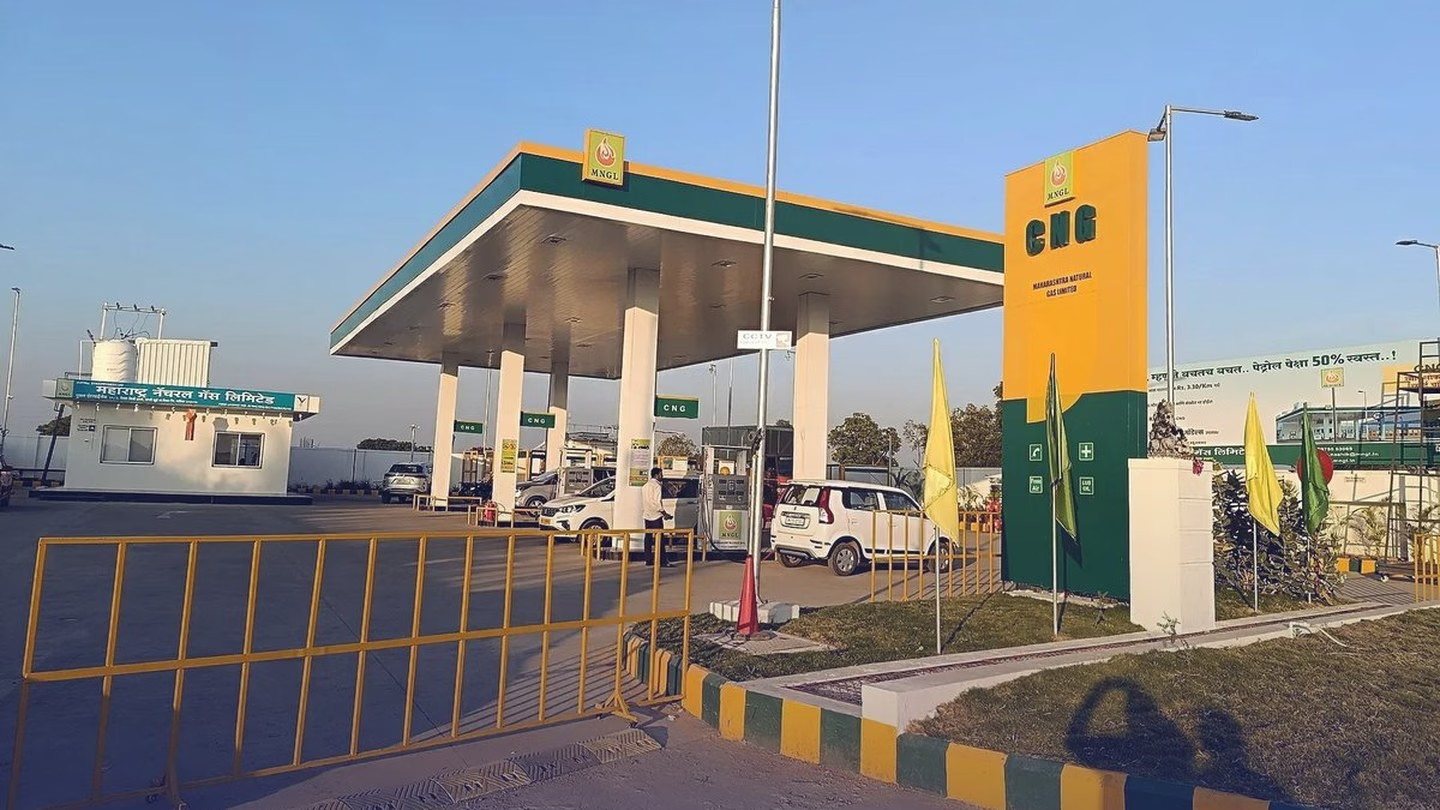
What pressure has to do with it
CNG is stored in your car or rickshaw at high pressure, around 200 bar when full. A dispenser can only push gas in while its own pressure is higher than the pressure in your cylinder. When the two meet, the flow stops.
So when a station’s pressure is low, your fill stops early. You pay for less gas and you get less range, even though the pump says it is done.
Why it drops
Pressure falls when a station is serving more vehicles than its compressor or storage can keep up with. That is usually at peak hours, when every rickshaw and car in the area fills up at once.
Some stations get their gas by truck and store it in cylinders on site. As those cylinders empty through the day, the pressure they can deliver falls with them.
How to avoid a half fill
- Look at the dispenser before you join the line. Most show the pressure. If it is well below your usual full reading, you may get a partial fill.
- Avoid the peak if you can. The same station can be fine at 3 pm and struggling at 7 pm.
- Check before you go. In GasView, drivers report the pressure as good, moderate or low, with the time of the report, so you can see it before you drive there.
Why GasView shows pressure, not price
Price comparison is what fuel apps do elsewhere. In India the price barely differs within a city, so it does not help anyone. Pressure is the thing every CNG driver has sat through and nobody else showed. That is why it is on every station in the app.

_Filling_Station,_Maharastra,_India_(1).jpg)